Is There a Silver Lining for Airline Companies as Crude Prices Return to Pre-War Levels?
Alex Smith
3 hours ago
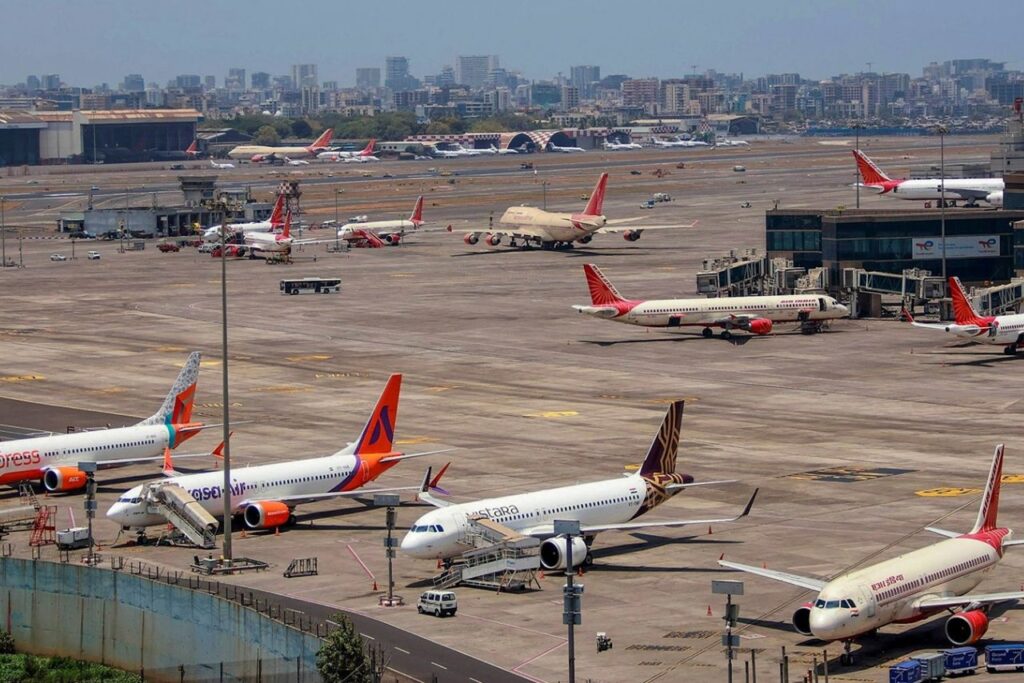
Synopsis: Easing crude oil prices back to pre-war levels provides a meaningful tailwind for airline companies by improving fuel cost dynamics and sentiment, while structural travel demand remains strong, though recovery in profitability may stay uneven and gradual.
The aviation sector has been one of the most sensitive to global crude oil movements, with fuel costs forming a significant share of airline operating expenses. The recent surge in oil prices during geopolitical tensions has placed severe pressure on margins, raising concerns over profitability and industry stability.
With crude prices now easing back toward pre-war levels, sentiment around airline companies has started to improve. This correction is offering some relief on cost pressures, even as broader challenges and recovery dynamics continue to shape the sector’s outlook.
The Pain That Made the Relief Meaningful
To appreciate the silver lining, investors first need to understand the extent of the damage caused by the surge in crude oil prices. As tensions in West Asia escalated and Brent crude climbed sharply, airline stocks came under significant pressure due to concerns over rising fuel costs.
Shares of InterGlobe Aviation and SpiceJet declined as investors feared that higher aviation fuel expenses would squeeze margins and weigh on profitability. With crude prices now retreating toward pre-war levels, those concerns have started to ease, offering a potential relief rally for airline stocks.
The Federation of Indian Airlines wrote to the Ministry of Civil Aviation, warning that the sector was on the verge of shutting down entirely. ATF prices in India crossed Rs. 2 lakh per kilolitre for the first time ever, more than doubling from March levels of Rs. 96,000 per kilolitre, and since ATF typically accounts for 30–40% of operating costs, that surge ballooned airline cost structures almost overnight. This was not a gradual squeeze; it was a shock that forced carriers to cancel routes, impose emergency fuel surcharges, and lobby the government for survival-level intervention.
Crude Has Now Come Back Down
Crude oil has fallen toward $72 per barrel, moving closer to levels seen before the Middle East conflict began, as a growing number of tankers resumed transit through the Strait of Hormuz amid advances in US-Iran peace negotiations, with the IEA confirming UAE oil exports in early June rebounded to nearly 85% of pre-conflict levels.
Indian aviation stocks have responded swiftly and sharply to the crude reversal. In just the past month, IndiGo outperformed the broader market by soaring 21%, hitting a high of Rs. 5,422 on the NSE, while Nifty 50 gained only 1.69% over the same period. The early signal came even before crude fully normalised. IndiGo and SpiceJet shares jumped when Trump cancelled plans to strike Iran and signalled a deal was near, as traders immediately priced in the possibility of Strait of Hormuz normalisation and lower fuel costs ahead. The market has clearly established that crude is the single most powerful near-term lever for this sector.
Government Support Has Added a Structural Safety Net
Beyond the crude price tailwind, the government stepped in with a policy cushion that outlasts the geopolitical crisis. The government introduced an ATF price stabilisation scheme under which oil marketing companies offer domestic airlines a fixed fuel rate of Rs. 115 per litre for up to three years on a voluntary basis, insulating carriers that opt in from future global benchmark fluctuations.
This is significant because it removes a degree of earnings uncertainty regardless of what crude does next. Combined with ECLGS 5.0 liquidity support announced during the crisis, airlines now have both a cost floor and a cash flow backstop, a combination that gives investors greater confidence in near-term earnings visibility, especially for carriers like IndiGo that were already structurally profitable before the conflict hit.
Analysts Are Turning Bullish
The analyst community has taken note of the improving setup. Jefferies reaffirmed an Overweight rating on InterGlobe Aviation, highlighting its scale and cost advantages, while noting that lower crude prices directly support the airline’s margin recovery story.
ICICI Securities maintained a Buy rating with a revised target price of Rs. 6,020, up from Rs. 5,210 earlier, based on 25x FY28 estimated PAT of Rs. 9,300 crore, and noted that IndiGo’s guidance of 15% CAGR in capacity over FY26–30, along with an increase in international mix to 40% from 32%, lends a strong long-term growth roadmap beyond the near-term recovery. IndiGo’s over 60% domestic market share and lowest cost per available seat kilometre among Indian carriers make it the clearest beneficiary when fuel costs ease.
The Risks That Remain Real
The silver lining is genuine, but the clouds have not fully cleared. IndiGo reported a net loss of Rs. 2,390 crore in FY26, primarily driven by the rupee depreciating more than 11% against the US dollar in just 12 months, one of its steepest declines in years, which inflated dollar-denominated lease and maintenance costs. Network recovery is also gradual.
IndiGo announced the temporary suspension of operations to Langkawi, Krabi, Ho Chi Minh City, Hong Kong, Shanghai, and Siem Reap from July 1 through September 30, 2026, citing elevated operating costs and continued airspace restrictions. However, analysts note that a decline in crude oil prices does not directly or immediately lead to lower jet fuel costs, as factors such as refinery output, inventory levels, distribution expenses, and seasonal demand influence how quickly the benefit passes through to airline operating costs.
Conclusion
The recent reversal in crude oil prices stands out as a key positive catalyst for the aviation sector, especially as the structural demand outlook for air travel remains firmly intact. The earlier war-related impact was largely a supply-side disruption rather than a decline in passenger demand.
If crude remains sustainably below key thresholds, the sector is likely to see stronger operating cash flows and improved financial stability. While the recovery path may be uneven, the overall trajectory for the industry remains decisively positive.
Disclaimer: The views and investment tips expressed by investment experts/broking houses/rating agencies on tradebrains.in are their own, and not that of the website or its management. Investing in equities poses a risk of financial losses. Investors must therefore exercise due caution while investing or trading in stocks. Trade Brains Technologies Private Limited or the author are not liable for any losses caused as a result of the decision based on this article. Please consult your investment advisor before investing.
The post Is There a Silver Lining for Airline Companies as Crude Prices Return to Pre-War Levels? appeared first on Trade Brains.
Related Articles

Multibagger Ashish Kacholia Stock in Which DIIs Nearly Tripled Their Stake to Keep on Your Radar
Synopsis: Institutional investors nearly tripled their stake in a Himachal Prade...

Madhusudan Kela Portfolio Stock Up Over 200% Is Now Targeting to Double Its Real Estate Profits in FY27
Synopsis: A legacy Indian conglomerate, freshly restructured after a three-year...

Ola Electric: Why Are Institutional Investors Turning Bullish on This EV Stock?
Synopsis: Ola Electric’s stock has more than doubled in three months, supp...

1,000% in 5 Yrs: Electrical Equipment Stock Betting Big on Data Centres, Grid Modernisation, and Renewables
Synopsis: A mid-cap electrical equipment maker that has delivered multi-bagger r...