How to Build a Retirement Portfolio That Actually Generates Income
Alex Smith
4 months ago
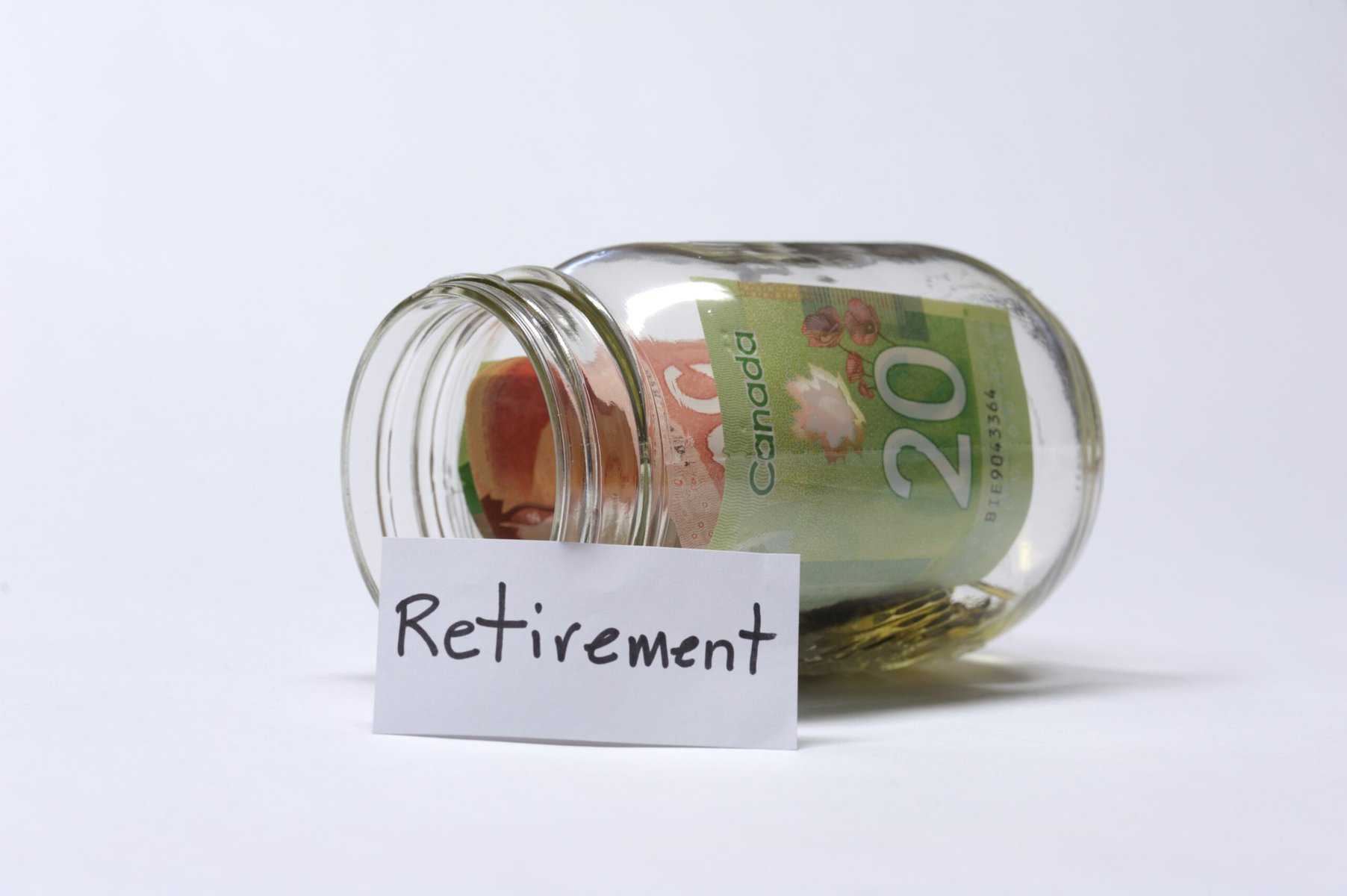
Retirees have a very different objective than younger investors. At this stage, itâs no longer about chasing maximum growth and hoping volatility works out over 30 years. You donât always have the luxury of time to recover from a 30% or 40% drawdown.
The priority shifts to protecting principal first, then generating reliable income â ideally enough to meet the minimum annual withdrawals required from a Registered Retirement Income Fund (RRIF).
For most Canadians, that income should complement guaranteed sources such as the Canada Pension Plan (CPP) and Old Age Security (OAS). The goal isnât to swing for the fences. Itâs to build a portfolio that can help fund your lifestyle without constant stress.
You could assemble your own basket of dividend stocks, real estate investment trusts (REITs), and royalty trusts. But that requires monitoring, rebalancing, and managing risk. A simpler approach is to outsource the heavy lifting to an exchange-traded fund (ETF).
However, not all income ETFs are appropriate for retirees. Many use leverage or covered call strategies. Those can increase risk, cap upside, and layer on higher fees. If the goal is stability and sustainability, you need something more balanced.
The mental accounting of retirement income
Before choosing an income ETF, itâs important to understand how distributions actually work. When a stock or fund pays a dividend, its price drops by the amount of the distribution on the ex-dividend date, all else being equal.
For example, a $100 fund that pays a $1 distribution is mechanically worth $99 the next morning. It may recover during the day if markets rise, but the payout itself isnât free money.
Mathematically, receiving a $1 distribution is no different from selling $1 worth of shares yourself. Either way, your account value is reduced by $1. But psychologically, it feels different.
When a fund sends you a distribution, it feels like income. When you sell shares to create your own âpaycheque,â it feels like youâre depleting your nest egg. Even though the math is the same, the emotional experience is not.
Thatâs why, for retirees, the focus should be on hard risk reduction. Look for low fees, broad diversification, and a distribution policy that is transparent and sustainable.
Why I like this income ETF
Most investors are familiar with asset allocation ETFs. These combine stocks and bonds into a single portfolio â 100% equity, 80/20, 60/40, 40/60 â allowing you to match your risk tolerance and time horizon with one holding.
For retirees, I like the BMO Balanced ETF (TSX: ZBAL), which holds roughly 60% in stocks and 40% in bonds.
For a 0.20% expense ratio, it provides diversification across Canada, the U.S., international developed markets, and emerging markets. Itâs simple, low-cost, and broadly diversified.
The challenge is that its natural yield is modest, currently around 2% with quarterly payouts. That means retirees would need to sell units periodically to generate sufficient income.
However, BMO offers an alternative: ZBAL.T. This version targets an annual distribution of roughly 6%, set each year. Unlike the standard version, the distribution is paid monthly.
That payout is funded through a combination of dividends from underlying stocks, interest from bonds, realized capital gains, and sometimes return of capital. For 2026, the current yield works out to about 5.3%.
Itâs not magic. But for retirees who prefer predictable portfolio withdrawals for income without manually selling shares, ZBAL.T can simplify the process while maintaining diversified exposure.
The post How to Build a Retirement Portfolio That Actually Generates Income appeared first on The Motley Fool Canada.
Should you invest $1,000 in Bmo Mutual Funds – Bmo Balanced ETF Portfolio right now?
Before you buy stock in Bmo Mutual Funds – Bmo Balanced ETF Portfolio, consider this:
The Motley Fool Canada team has identified what they believe are the top 10 TSX stocks for 2026⦠and Bmo Mutual Funds – Bmo Balanced ETF Portfolio wasnât one of them. The 10 stocks that made the cut could potentially produce monster returns in the coming years.
Consider MercadoLibre, which we first recommended on January 8, 2014 … if you invested $1,000 in the âeBay of Latin Americaâ at the time of our recommendation, youâd have $21,827.88!*
Now, it’s worth noting Stock Advisor Canada’s total average return is 102%* – a market-crushing outperformance compared to 81%* for the S&P/TSX Composite Index. Don’t miss out on our top 10 stocks, available when you join our mailing list!
Get the 10 stocks instantly #start_btn6 { background: #0e6d04 none repeat scroll 0 0; color: #fff; font-size: 1.2em; font-family: 'Montserrat', sans-serif; font-weight: 600; height: auto; line-height: 1.2em; margin: 30px 0; max-width: 350px; text-align: center; width: auto; box-shadow: 0 1px 0 rgba(0, 0, 0, 0.5), 0 1px 0 #fff inset, 0 0 2px rgba(0, 0, 0, 0.2); border-radius: 5px; } #start_btn6 a { color: #fff; display: block; padding: 20px; padding-right:1em; padding-left:1em; } #start_btn6 a:hover { background: #FFE300 none repeat scroll 0 0; color: #000; } @media (max-width: 480px) { div#start_btn6 { font-size:1.1em; max-width: 320px;} } margin_bottom_5 { margin-bottom:5px; } margin_top_10 { margin-top:10px; }* Returns as of January 15th, 2026
More reading
Fool contributor Tony Dong has no position in any of the stocks mentioned. The Motley Fool has no position in any of the stocks mentioned. The Motley Fool has a disclosure policy.
Related Articles

1 Magnificent TSX Dividend Stock Down 60% to Buy and Hold for Decades
Pet Valu Holdings (TSX:PET) stands out as a value play in itself after a nasty s...
A 6% Dividend Stock Ideal for Passive-Income Seekers
Alaris Equity Partners looks like a rare case where a 6% yield may be supported...

Is TELUS’s Dividend Still Worth Counting on?
TELUS’s 10% yield looks tempting, but it’s also the market flashing a warning si...
TSX Today: What to Watch for in Stocks on Friday, June 26
The TSX posted a modest recovery on Thursday as gains in mining and industrial s...