How Much Canadians Typically Have in a TFSA by Age 55
Alex Smith
2 hours ago
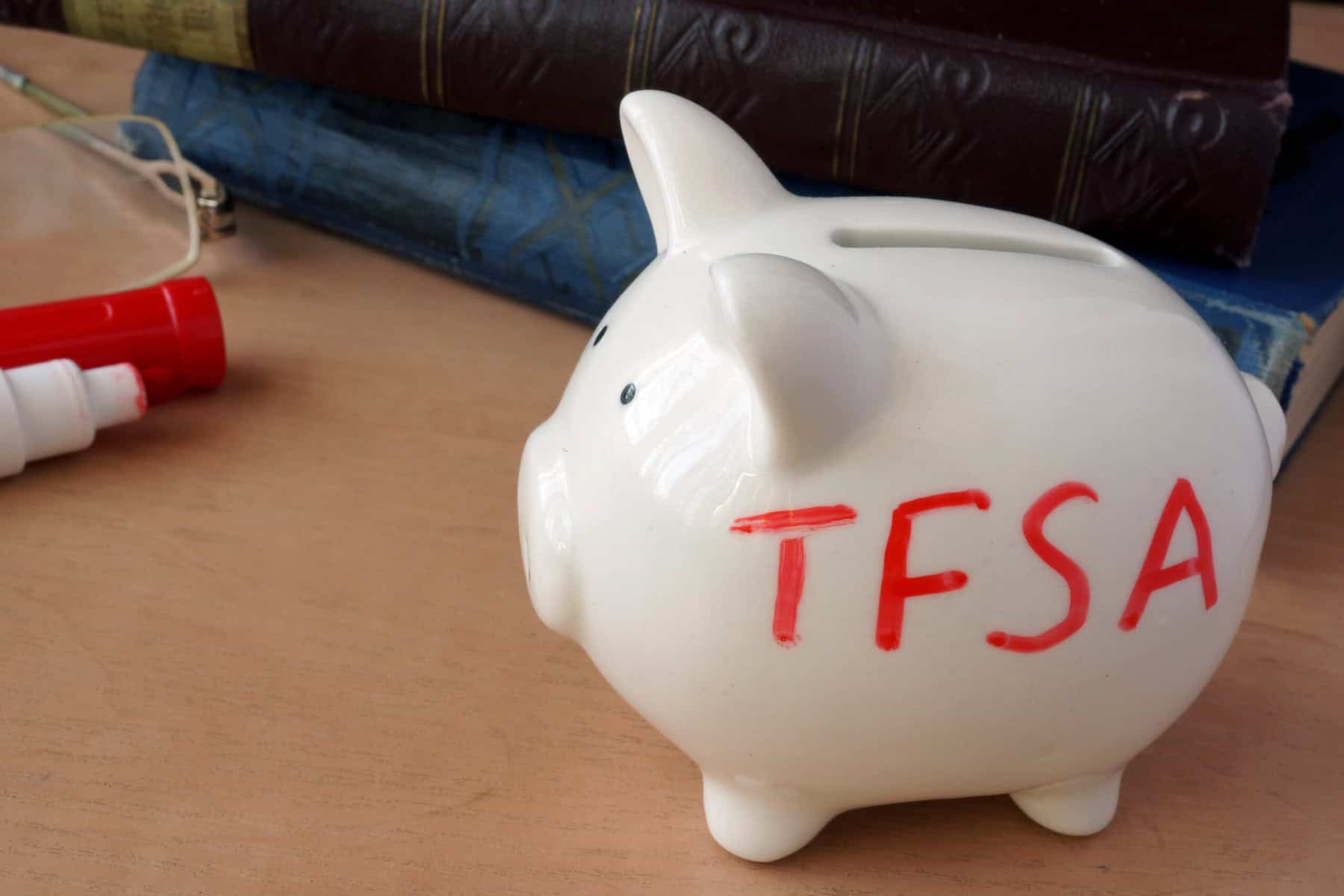
The average Tax-Free Savings Account (TFSA) at 55 may surprise you. And I kind of hope it does.
By that age, many Canadians are thinking seriously about retirement, mortgage freedom, helping adult kids, or building a bigger tax-free income stream. Yet CRA data shows Canadians aged 55 to 59 had an average TFSA fair market value of $43,519 in the 2024 tax year. That’s under 40% of what this age group has available in their TFSA contribution room at writing.
Bridging the gap
Now to be clear, that’s not a bad number. But itâs also well below the full potential of the account. If youâre 55 and your TFSA is below that average, donât panic. Averages can be misleading. Some Canadians use their TFSA for emergencies. Some hold cash. Some withdrew money for a home, a renovation, a job loss, or family needs. Others didnât have money to contribute every year.
There’s also the fact that Canadians have multiple tax-beneficial accounts they can invest in. Many may choose to put their funds in a Registered Retirement Savings Plan (RRSP) instead, saving for retirement while bringing down their total taxable amount each tax season.
So if you’re below that threshold, or indeed reaching it, the question may not be how did you get here, but the better question is what to do next?
Consider XEQT
Thatâs where an ETF such as the iShares Core Equity ETF Portfolio (TSX:XEQT) can help. XEQT is an all-in-one equity ETF. It gives investors exposure to thousands of stocks across Canada, the United States, international developed markets, and emerging markets. Instead of trying to pick the perfect stock, investors can own a globally diversified portfolio through one TSX-listed fund.
For a 55-year-old Canadian, that can be useful. There may still be 10, 15, or even 20 years before needing to draw heavily from a TFSA. Retirement isnât one single day where investing stops. Many investors will keep part of their portfolio growing well into their 60s, 70s, and beyond.
XEQT fits investors who want long-term growth and can handle market swings. It doesnât hold bonds, and that means it can fall hard during market downturns. Investors who need money within the next year or two probably shouldnât put that cash into an all-equity ETF. But for money meant to grow over many years, XEQT can do a lot of work.
Why it works
The appeal is simplicity. One ETF can replace a messy mix of funds, random stocks, and cash sitting idle. It also removes the need to keep guessing which market will perform best next. If U.S. stocks lead, XEQT has exposure. If Canadian banks, energy stocks, or global companies perform well, the fund participates too.
The cost is also low. BlackRock reduced XEQTâs management fee to 0.17% in late 2025. Fees arenât exciting, but they eat into returns every year. A low-cost ETF lets more of the marketâs return stay with the investor.
A 55-year-old with a $43,519 TFSA doesnât need to swing for the fences. The account still has time to grow, especially if contributions continue and distributions are reinvested. Even investing that amount in XEQT can make a meaningful difference when paired with a disciplined investment plan.
COMPANYRECENT PRICENUMBER OF SHARESANNUAL DIVIDENDANNUAL TOTAL PAYOUTFREQUENCYTOTAL INVESTMENTXEQT$45.54956$0.66$630.96Quarterly$43,536.24Bottom line
The biggest mistake is treating the average as a final grade. It isnât. The average tells you where many Canadians sit. It doesnât tell you what your TFSA can become. For some investors, the right move may be to build a balanced mix of cash, fixed income, dividend stocks, and growth ETFs. For others with enough savings elsewhere and a longer time horizon, XEQT could be a strong core holding.
At 55, the TFSA still has real power. The contribution room is valuable. The tax-free growth is valuable. And a simple global equity ETF can turn unused or underused room into a long-term wealth-building tool. So while the average Canadian TFSA balance at 55 may be $43,519, that number doesnât have to define your next decade.
The post How Much Canadians Typically Have in a TFSA by Age 55 appeared first on The Motley Fool Canada.
Should you invest $1,000 in iShares Core Equity ETF Portfolio right now?
Before you buy stock in iShares Core Equity ETF Portfolio, consider this:
The Motley Fool Canada team has identified what they believe are the top 10 TSX stocks for 2026⦠and iShares Core Equity ETF Portfolio wasnât one of them. The 10 stocks that made the cut could potentially produce monster returns in the coming years.
Consider MercadoLibre, which we first recommended on January 8, 2014 … if you invested $1,000 in the âeBay of Latin Americaâ at the time of our recommendation, youâd have over $16,000!*
Now, it’s worth noting Stock Advisor Canada’s total average return is 91%* – a market-crushing outperformance compared to 87%* for the S&P/TSX Composite Index. Don’t miss out on our top 10 stocks, available when you join our mailing list!
Get the 10 stocks instantly #start_btn6 { background: #0e6d04 none repeat scroll 0 0; color: #fff; font-size: 1.2em; font-family: 'Montserrat', sans-serif; font-weight: 600; height: auto; line-height: 1.2em; margin: 30px 0; max-width: 350px; text-align: center; width: auto; box-shadow: 0 1px 0 rgba(0, 0, 0, 0.5), 0 1px 0 #fff inset, 0 0 2px rgba(0, 0, 0, 0.2); border-radius: 5px; } #start_btn6 a { color: #fff; display: block; padding: 20px; padding-right:1em; padding-left:1em; } #start_btn6 a:hover { background: #FFE300 none repeat scroll 0 0; color: #000; } @media (max-width: 480px) { div#start_btn6 { font-size:1.1em; max-width: 320px;} } margin_bottom_5 { margin-bottom:5px; } margin_top_10 { margin-top:10px; }* Returns as of June 15th, 2026
More reading
- This Is the TFSA Balance You’ll Likely Need to Retire Comfortably in Canada
- A Smart Strategy to Use Your TFSA to Effectively Double Your $7,000 Contribution
- Are You Using Your TFSA the Right Way? Many Canadians Aren’t
Fool contributor Amy Legate-Wolfe has no position in any of the stocks mentioned. The Motley Fool has no position in any of the stocks mentioned. The Motley Fool has a disclosure policy.
Related Articles

1 No-Brainer TSX Stock to Buy With $1,000 Right Now
Blackberry is gaining momentum. Here is why you should buy BB stock now. The po...

2 Dividend Stocks to Hold for the Next 5 Years
Given their resilient business models, strong financial positions, consistent di...

2 Stocks That Could Turn $100,000 Into $1 Million
A $100,000 investment needs exceptional compounders, and these two stocks have t...

If I Had to Pick Just One Stock to Hold Forever, This Would Be My Choice
This Canadian stock stands out as a long-term compounder built around everyday c...