DLF Is Building The ‘Rolls-Royce of Real Estate’ And Here’s Why It Could Be A Major Growth Driver
Alex Smith
2 months ago
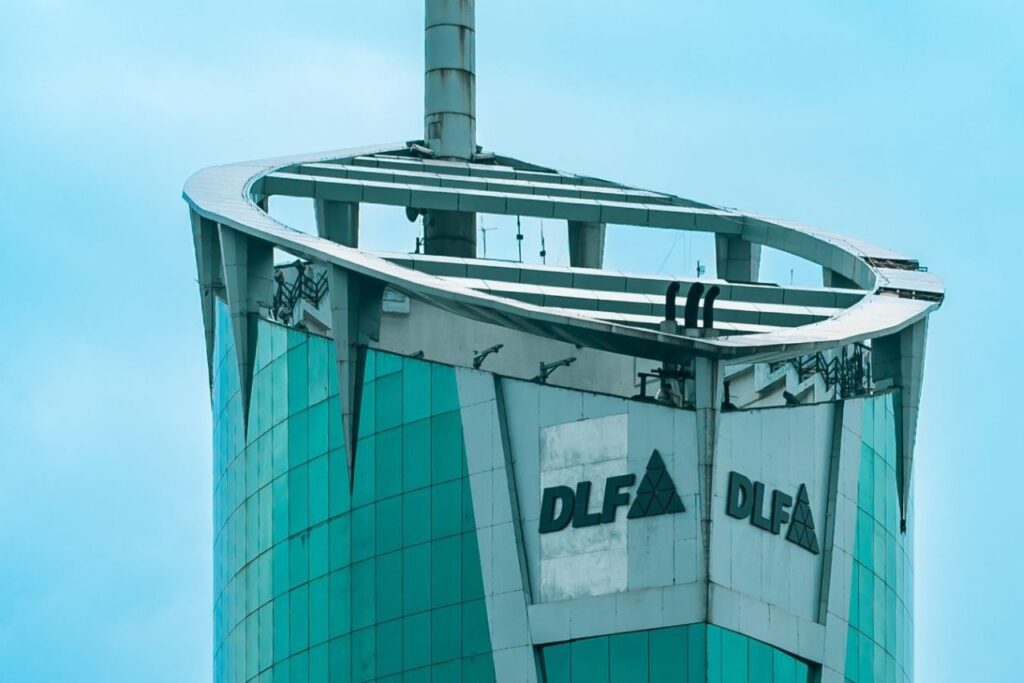
Synopsis: DLF is building what it calls a super-luxury, invitation-only project in Gurugram with prices among the highest in the market. While thousands of crores in sales are already locked in, the real earnings story is yet to unfold. Could this high-end project quietly become a powerful long-term growth driver for the company?
At a time when luxury housing has become one of the strongest themes in Indian real estate, DLF is taking that trend to an even higher level with The Dahlias in Gurugram. This is not a typical residential launch built around volume sales or broad affordability. It is a super-luxury project aimed at a far narrower and much wealthier buyer base. That also makes it one of the most closely watched projects in the company’s pipeline.
Yet, despite the excitement around the project and the large value of sales already booked, its contribution to reported earnings has still not started showing up in the numbers. That is what makes The Dahlias so interesting. It is already important to DLF’s growth story, but much of that importance is still sitting in the future rather than in the current profit and loss statement.
What Exactly Is The Dahlias?
What makes The Dahlias different is the way management itself is positioning it. In Q2FY26, DLF said The Dahlias is not a mass product and is being sold only on an invitation basis. Management also described it as a Rs. 100 crore-plus kind of investment, which immediately sets it apart from even most premium luxury launches. The company said it has been seeing traction from wealthy families across cities, from the rest of India, and from non-resident Indians as well. In other words, DLF is not treating this as a regular housing project. It is selling it more like a scarce, high-value asset meant for a very specific set of buyers. That is why the project is central not just to DLF’s sales story, but also to its brand positioning in the super-luxury segment.
The Numbers That Matter
The numbers in the Q3FY26 show why the market is paying so much attention to this project. As of December 31, 2025, The Dahlias had already clocked sales bookings of Rs. 15,716 crore. At the same time, revenue recognized from these sales was still nil. That means the entire Rs. 15,716 crore remains to be recognized in future periods. Even more importantly, the project carried balance margins yet to be recognized of Rs. 10,835 crore. These are very large numbers even in the context of DLF’s overall development business. For comparison, The Camellias with cumulative sales booked of Rs. 12,138 crore and only Rs. 167 crore of balance revenue left to be recognized, while The Dahlias still has its full booked value sitting ahead. This makes it clear that Dahlias is already one of the biggest future earnings reservoirs in DLF’s portfolio.
In Q2FY26, management had already indicated that the project was moving well. Management said The Dahlias had crossed 50 percent sales, had sold 18 units during the quarter, and had sold 221 units cumulatively. It also said carpet-area pricing had reached around Rs. 1.25 lakh to Rs. 1.50 lakh depending on the unit’s location. Management added that it expected the main phase of the story to begin after the experience centre was ready, after which price points would move substantially higher. This was an important signal. It showed that DLF did not see Dahlias as a project where the main task was just to fill inventory. Instead, it was trying to build price, aspiration and scarcity into the product over time.
What Happened In Q3?
On the surface, Q3 sales looked weak. The company said new sales bookings for the quarter were only Rs. 419 crore, and specifically noted that new bookings in Dahlias were on hold in Q3 due to a redesign meant to enhance customer experience, with bookings resuming in Q4. In the earnings call, the company mentioned that they made design changes in Dahlias to improve the layout and the client experience. Since such changes require regulatory compliance, DLF had to obtain approval from existing customers and then have RERA take cognizance of those approvals. Management said around 75 percent of buyers needed to sign off, and that about two to two-and-a-half months of the quarter were spent in this process. RERA approval came in early January, after which sales resumed. This means Q3 weakness in Dahlias was not presented as a demand issue. It was described as a planned regulatory and design-led pause.
How Dahlias Will Impact Earnings
Management then added another layer to this explanation. It said the redesign was not cosmetic. According to the management, DLF chose to move to newer codes instead of staying with the old framework. Management said this led to a manifold improvement in structural stability and other design elements, including parts of the facade. It also admitted that the redesign would lead to some increase in construction cost. However, this came with a very important qualifier. Management said Dahlias follows a dynamic pricing system, that pricing had already increased by 25 percent over the past year, and that the project’s margins would remain intact, if not improve. So the company’s message was clear: even if the redesign raises costs, DLF believes it has enough pricing power to protect profitability. That is an important signal for a project of this size.
To understand why Dahlias can become such a meaningful growth driver, it is important to understand how this value will flow into earnings. The Rs. 15,716 crore booked so far is not annual revenue and it will not appear in one quarter or one year. In real estate, revenue is generally recognized over time as construction progresses and contractual milestones are achieved.
DLF itself pointed to this logic in the Q2 when it said collections are dependent on how construction develops and are linked to payment schedules. That is why a project can generate large sales bookings long before it begins to show up in reported revenue and profit. In the case of Dahlias, this is especially clear because the project already has very large booked sales and very large pending margins, but still no recognized revenue. The implication is simple. Dahlias should not be viewed as a one-time earnings spike. It is better understood as a multi-year pipeline of future revenue and profit that will unfold as the project gets built.
This also means the project’s earnings impact is likely to build gradually rather than suddenly. In the near term, its contribution to reported revenue may remain modest because the project is still in the early stages and management itself has described it as being before the main formal launch phase. Over the medium term, as construction advances and the company moves deeper into execution, more of this booked value should start flowing into the income statement. Because the pending margin pool is also large, the contribution to profit could become significant over time. But the key point is that this process will be spread out. The project is large enough to matter, but accounting and execution will determine the pace at which that value becomes visible in DLF’s numbers.
What Management Is Really Signalling
The most revealing part of the Dahlias story, however, lies in what management is signaling through its language and actions. First, the company has repeatedly said this is not a mass product. That matters because it tells investors DLF is not chasing volume for its own sake here. It is consciously targeting a niche, high-value segment. Second, management has made it clear that it is in no hurry to offload inventory. In Q2FY26, it said the company would not rush to sell and that the project would “take its own game” after what it had already achieved. That kind of language usually suggests pricing discipline rather than sales pressure. Third, DLF appears confident enough in demand to keep selling by invitation even after prices have moved sharply higher. That is unusual and points to strong brand pull.
Fourth, the Q3 redesign episode says something important about DLF’s priorities. The company was willing to sacrifice one quarter’s reported sales momentum in order to alter the design, move to newer codes and improve the end product. A company under sales pressure usually does not do that; DLF did. This suggests management is looking at Dahlias as a long-duration value creator rather than a project that must maximize short-term booking numbers at any cost. Fifth, its comments on pricing are equally telling. A 25 percent increase in pricing over the past year, along with the assertion that margins remain intact, suggests the company believes demand is strong enough to absorb higher prices and support long-term profitability. Taken together, management’s commentary points to Dahlias being positioned not as a volume engine, but as a high-margin, brand-enhancing and multi-year earnings driver.
The Bigger Picture
There is also a broader context here. DLF is not depending only on Dahlias for future growth. In both Q2 and Q3 concalls, management spoke about a visible launch pipeline that includes Arbour 2, another Privana phase, Panchkula, Westpark’s next phase and additional projects in DLF City. It also said Dahlias would continue to be a strong underpinning for this pipeline. So the real story is not that one project alone will drive everything. It is that Dahlias sits at the center of a wider premium and luxury pipeline that can support DLF’s development business over several years.
Risks And Reality Check
Of course, there are still risks. Since revenue has not yet been recognized, timing will depend on execution. The project is also aimed at a very high-end buyer segment, which means demand is narrower by design. And because it is being sold with pricing discipline rather than speed, quarterly pre-sales can look uneven. But none of those risks change the basic conclusion from the filings. The Dahlias is already large in booked value, large in pending margins and clearly central to DLF’s premium strategy.
Conclusion
Viewed this way, The Dahlias is not important because it can create a sudden jump in one quarter’s numbers. It is important because it can keep feeding DLF’s revenue, margins and brand over a much longer period. That is why it may turn out to be one of the company’s most powerful growth drivers, even if the full impact is still ahead.
Disclaimer: The views and investment tips expressed by investment experts/broking houses/rating agencies on tradebrains.in are their own, and not that of the website or its management. Investing in equities poses a risk of financial losses. Investors must therefore exercise due caution while investing or trading in stocks. Trade Brains Technologies Private Limited or the author are not liable for any losses caused as a result of the decision based on this article. Please consult your investment advisor before investing.
The post DLF Is Building The ‘Rolls-Royce of Real Estate’ And Here’s Why It Could Be A Major Growth Driver appeared first on Trade Brains.
Related Articles

5 Small-Cap Defence Supplier Stocks With Strong Order Books and High Exposure to Defence Programs
Synopsis: Five small-cap defence suppliers with strong order books and deep expo...
Stocks to Watch: M&M and 9 other Stocks Trading Ex-Dividend Next Week to Keep on Your Radar
Synopsis: Bajaj Holdings, Bajaj Finance, Bharat Forge, Biocon, Exide Industries,...

Stocks to Buy: 5 Stocks to Buy Now for an Upside of Up to 46%; Do You Own Any?
Synopsis: Brokerages are bullish on select stocks across metals, auto, real esta...

How Much Power Does Akash Ambani Actually Have In Reliance?
Synopsis: Akash Ambani owns only a small direct stake in Reliance, yet he sits a...