Defence Stocks That Can Benefit from the Global Shortage of 155 mm Artillery Shells
Alex Smith
4 months ago
Synopsis: The world suddenly needs far more 155 mm artillery shells for its war against any nation. Factories can’t produce them quickly enough. But here’s the catch: while most people aren’t paying attention, some Indian defence companies are preparing to take advantage of this demand, and they appear poised for the long term.
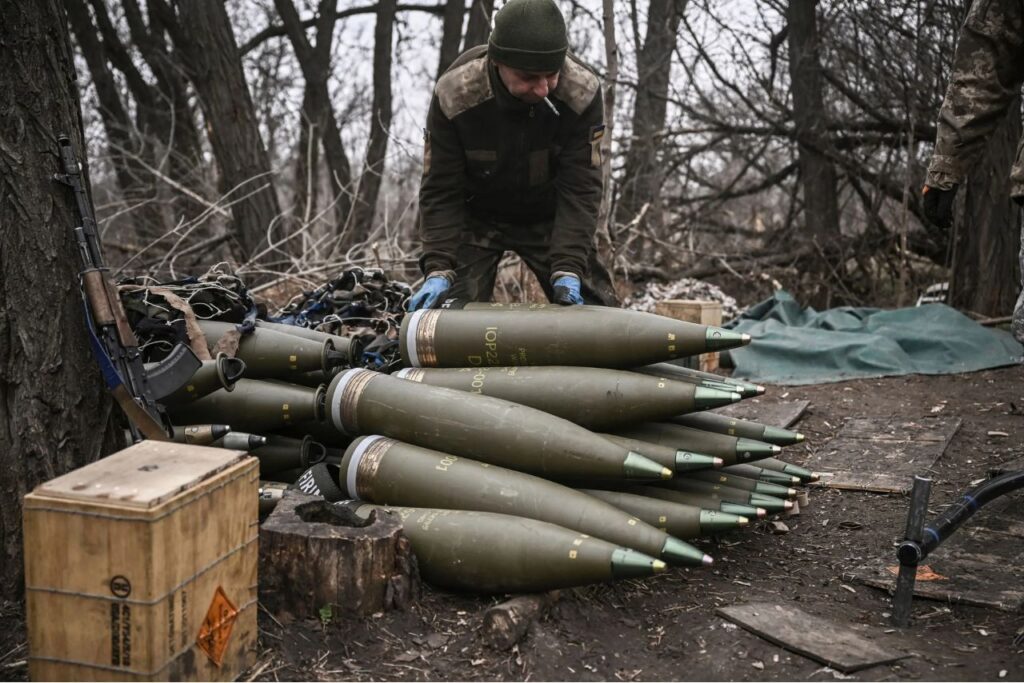
The 155 mm artillery shell may look like just a large piece of metal, but in modern warfare, it is one of the most important tools an army has. Imagine a giant bullet, roughly 45 kilograms in weight, about two feet long and six inches wide. That is a 155 mm shell. It is fired from heavy guns called howitzers and can strike targets 30 to 40 kilometres away. The soldiers firing it often never see the enemy directly. Yet this single round can destroy bunkers, vehicles, or defensive positions with enormous explosive force.
More than 75 armies across the world use 155 mm-compatible systems, including the US Army’s M777, India’s Dhanush and K9 Vajra-T, and nearly every NATO country, and it has become the global standard for long-range land warfare.
For decades after the Cold War, countries assumed their old ammunition stockpiles were enough. Factories slowed down. Production lines were reduced. Governments preferred buying advanced jets and missiles instead of investing in “basic” artillery shells.
Then the Russia-Ukraine war began in 2022, and everything changed. Ukraine publicly stated it needed up to 20,000 shells per day at the peak of fighting. At times, it received less than half of that. Artillery quickly became the main weapon of the conflict, responsible for an estimated 80 percent of battlefield damage. Suddenly, the world realised it was running out of ammunition.
Global demand for 155 mm shells is now estimated at 7.5 to 8 million rounds per year. This includes battlefield consumption in Ukraine, NATO countries rebuilding stockpiles, and rising procurement in Asia and the Middle East. However, global production capacity is estimated at only 3 to 3.5 million shells annually, which leaves a gap of over 4 million shells every year.
Even countries trying aggressively to scale up are struggling. The US Army, for example, aimed to reach 100,000 shells per month by 2025, equal to 1.2 million annually. As of mid-2025, it was producing closer to 40,000 per month, pushing full ramp-up targets further into 2026. European production plans also faced similar challenges, delays, or structural limits that make ambitious targets hard to meet.
Why can’t the world simply build more factories?
The answer lies in complexity. A 155 mm shell is not just a metal tube filled with explosive. It requires forged steel bodies, precision machining, explosive compounds such as TNT or RDX-based mixtures, propellant charges, fuzes, and strict quality testing, where explosive production itself has become a bottleneck.
The US stopped domestic TNT production decades ago and relied on imports from countries like Russia and Ukraine. When war disrupted those supplies, new facilities had to be built, including a $435 million TNT plant in Kentucky. Building such facilities takes years because of safety regulations, environmental approvals, and specialised engineering.
Stockpile depletion is another critical factor. Russia reportedly began the war with around 16 million artillery rounds, and a large portion of that was consumed within the first year. The US alone has sent more than 2 million 155 mm shells to Ukraine.
Every NATO country that donated ammunition now needs to replenish its own reserves. This creates long-term demand that will not disappear even if the war slows down. Artillery ammunition is consumable. Unlike tanks or aircraft that last for decades, shells are fired and must be replaced.
This structural shortage has turned ammunition into a strategic asset. Governments are signing long-term contracts and directly funding expansion projects. The global 155 mm ammunition market, currently estimated at around $4–5 billion annually, is projected to grow toward $7 billion or more by the early 2030s. The growth is driven by both higher volumes and rising prices due to tight supply.
India has quietly stepped into this gap. Traditionally dominated by public sector units, India’s artillery ammunition ecosystem is now seeing strong private sector participation. Munitions India Limited (MIL), carved out of the old Ordnance Factory Board, has become a significant producer of 155 mm shells.
India recorded its highest-ever defence production of about Rs 1.5 lakh crore in FY 2024-25, and defence exports reached a record ~Rs 23,600 crore (~$2.8 billion) in the same period. The government has set ambitious targets to further scale up, aiming for defence production of ~Rs 3 lakh crore by 2029 and defence exports of ~Rs 50,000 crore by 2029, reflecting a significant push to strengthen domestic manufacturing and expand India’s share in global defence markets.
Reports indicate export deals, including a $225 million agreement with Saudi Arabia. Indian shells are reportedly priced between $300 to $400 per unit, compared to $3,000 for some Western equivalents, making them attractive for countries with limited budgets.
India is also investing in technology upgrades. IIT Madras and Munitions India Limited are working on a 155 mm “smart shell” guided by India’s NavIC satellite system, aiming to improve accuracy dramatically compared to conventional shells. Such advancements could increase the value per round and move India up the technological ladder.
Here are the top stocks which might benefit from this industry
Goodluck India: Goodluck India has moved beyond the planning phase and is now fully operational. By October 2025, their defence plant in Sikandrabad, UP, began commercial production, initially with a capacity of 1.5 lakh (150,000) shells per year. The plant is already contributing to major projects like BrahMos and Pinaka.
With strong global demand, the company approved a Rs 500 crore expansion, targeting completion by late 2026. This investment will increase their output by another 2.5 lakh shells, bringing total production to 4 lakh units annually. They’re financing this growth through a combination of debt and equity, which truly positions them among the fastest-growing private companies in the sector.
Solar Industries India: Solar Industries is changing direction, from simply providing explosives and propellants, they are moving up to produce complete ammunition. By the end of 2025, they had started trial runs for their own 155mm shells. Then, the management made it clear that they are aiming to begin commercial production by Q4 FY26.
Sunita Tools: Sunita Tools has set out an ambitious plan to break into the top tier of shell manufacturers by March 2028. Right now, they’re investing Rs 126 crore to boost production, aiming to triple their current output. The goal is to move beyond their small-scale origins and start producing 3.6 lakh shells annually.
For this, the company has acquired a second factory building in Faridabad to establish what they’re calling “Line 2.” While reaching the full 3.6 lakh target is set for 2028, they plan to have the first phase of this new line operational by October 2026. The main focus? High-precision machining of NATO-standard 155mm rounds. That’s where they want to stand out.
Balu Forge Industries: In December 2025, Balu Forge made waves by launching a fully automated production line at its new Belgaum campus. This setup uses FANUC robotics and produces a shell every 55 seconds, quite impressive. At present, they’re turning out around 360,000 shells per year, ranging from 81mm up to 155mm calibres.
They also hinted at possibly adding more precision lines at the same location in the future, but that isn’t their main priority right now. What’s most important to them at the moment is delivering on their recent entry into the NATO supply chain. That’s significant; it opens up access to some major export markets.
Tirupati Forge: Tirupati Forge is close to commissioning its new defence facility, with final inspections expected to conclude by the end of FY26 and trial runs wrapping up in Q4 FY26. Commercial production is expected to commence shortly thereafter.
The initial focus will be on manufacturing Empty Shell Body 155mm M107, with an installed annual capacity of approximately 1.2 lakh (120,000) units. For this, the company plans a phased ramp-up rather than operating at peak levels immediately, targeting full capacity utilisation by H1 FY27.
Given increasing interest from international buyers and the broader acceleration in global defence spending, Tirupati Forge has also outlined capacity expansion plans beginning in FY27 to capitalise on emerging opportunities in the artillery and defence manufacturing segment.
In summary, the shortage is not a short-term spike caused by one conflict, but rather it reflects three decades of underinvestment in ammunition production, combined with sudden high-intensity warfare. Every new artillery system deployed globally creates recurring demand for decades. Even if the Ukraine war eventually ends, NATO rearmament, Middle Eastern defence expansion, and Asian security concerns will continue driving procurement.
India’s advantage lies in cost competitiveness, growing manufacturing scale, and geopolitical positioning. Unlike Russia or China, India can export to NATO-aligned countries, Gulf states, and Southeast Asian democracies. As global buyers search for diversified suppliers, India’s artillery manufacturing ecosystem is gaining visibility.
In simple terms, the world needs more shells than it can currently produce. Building capacity takes time. Until supply catches up, 155 mm artillery ammunition will remain one of the most strategically important and commercially significant segments in the defence industry. For Indian manufacturers positioned across explosives, forging, and complete shell assembly, this global supply crunch may represent a rare, multi-year structural opportunity rather than a temporary boom.
Disclaimer: The views and investment tips expressed by investment experts/broking houses/rating agencies on tradebrains.in are their own, and not that of the website or its management. Investing in equities poses a risk of financial losses. Investors must therefore exercise due caution while investing or trading in stocks. Trade Brains Technologies Private Limited or the author are not liable for any losses caused as a result of the decision based on this article. Please consult your investment advisor before investing.
The post Defence Stocks That Can Benefit from the Global Shortage of 155 mm Artillery Shells appeared first on Trade Brains.
Related Articles

Greaves Cotton Shares Surge 5% After Setting Up Wholly Owned Trading Subsidiary in Dubai
Synopsis: Greaves Cotton Limited has incorporated a wholly owned subsidiary, Gre...
Defence Stock Jumps 10% After Signing Agreement With Austrian Firm for Aerospace Components
Synopsis: Unimech Aerospace and Manufacturing Limited jumps upto 10% upon signin...

Reliance Power Shares Surge After Renaming 4 Subsidiaries for Artificial Intelligence Pivot
Synopsis: Reliance Power Limited has taken its first formal step into the artifi...

Solar Stock Jumps After Securing a 236 MW Solar Module Supply Order
Synopsis: Waaree Energies announced that its U.S. subsidiary secured a 236.22 MW...