Crude Slides Below $79 as US-Iran Peace Talks Eases Strait of Hormuz Risk
Alex Smith
2 hours ago
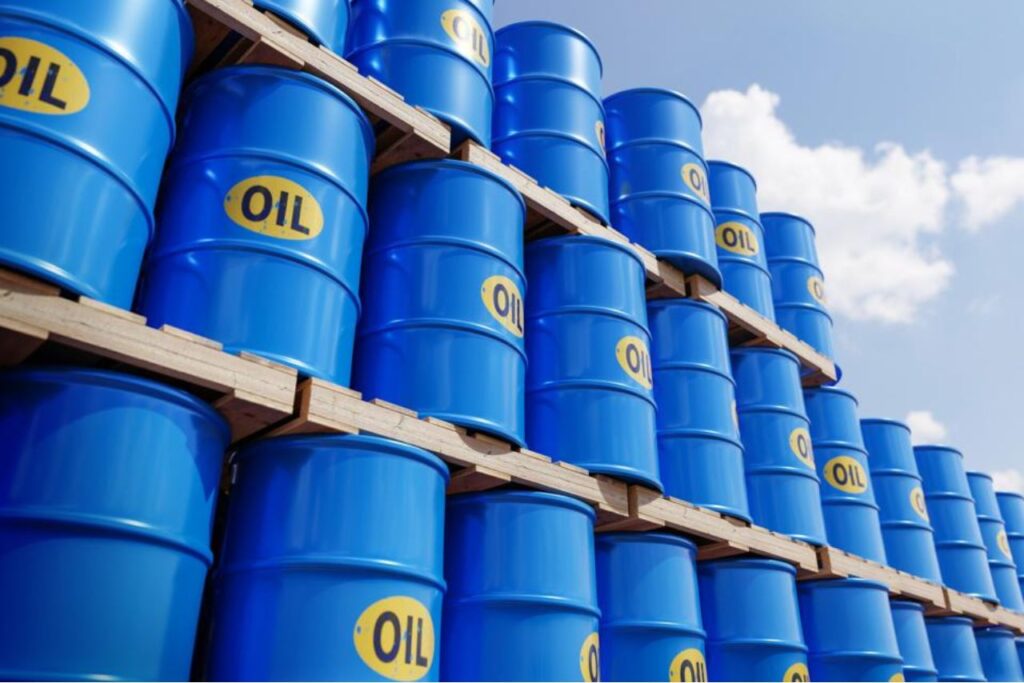
Synopsis: Crude oil prices fell sharply as US-Iran peace talks in Switzerland showed tentative progress, with WTI dropping 2.76% to $75.20 per barrel and Brent sliding to $78.90. The Indian rupee firmed near 94.3 per dollar, touching six-week highs, though renewed threats from both Washington and Tehran kept markets cautious and gains limited.
Global oil markets turned volatile on June 22, 2026, as conflicting signals from the US-Iran nuclear and security negotiations pulled prices in opposite directions within the same trading session. WTI crude ended the day at $75.20 per barrel, down 2.76% on the day and sharply lower from intraday highs, while Brent crude for August delivery fell 1.7% to $78.90. For Indian markets, the directional move in crude was the most consequential macro development of the day a softer oil price directly relieves India’s import bill, supports the rupee, and reduces inflationary pressures that the Reserve Bank of India has been carefully monitoring.
What Drove Oil Lower — And Why It Isn’t Settled
The session began on a bullish note. Oil prices opened more than 1.5% higher as markets reacted to US President Donald Trump’s threats of fresh military strikes against Iran if Hezbollah continued its attacks on Israel, and his renewed warnings against any closure of the Strait of Hormuz the narrow waterway through which roughly 20% of the world’s oil supply passes every day. To put the Strait of Hormuz in perspective for readers unfamiliar with it: it is essentially the world’s most important oil chokepoint, a narrow passage between Iran and Oman connecting the Persian Gulf to the open ocean. Any disruption there deliberate or accidental would immediately tighten global oil supply and send prices sharply higher.
The bearish turn came midway through the session when Qatar and Pakistan, acting as intermediaries, released a joint statement indicating that both the US and Iran had agreed on a roadmap aimed at securing a final agreement within 60 days. Progress toward a deal removes the immediate risk premium that geopolitical tension had embedded in oil prices, and markets responded by selling off rapidly.
However, the picture quickly became complicated again. Iranian state media reported that Tehran had suspended talks in response to Trump’s renewed threats, while Iranian negotiators simultaneously demanded a ceasefire in Lebanon as a precondition for further substantive discussions including any conversation about Iran’s nuclear programme. Vice President JD Vance, meanwhile, was meeting Iranian officials in what was being described as an interim peace arrangement, even as Trump publicly threatened tolls and military action.
The net result is a market caught between two powerful and opposing forces: the possibility of a diplomatic resolution that would bring Iranian oil back into global markets more freely, and the reality that the same process could collapse at any moment under the weight of domestic political pressures on both sides. Millions of barrels continued flowing through the Strait of Hormuz over the weekend as Persian Gulf producers prepared to increase output suggesting the physical oil market is not yet pricing in a serious supply disruption, even as the headline risk remains very real.
What This Means for India: Crude, Rupee, and Inflation
As the world’s third-largest crude oil importer, India is uniquely sensitive to energy market fluctuations. Every $10 per barrel decline in crude prices reduces India’s annual import bill by approximately $12–15 billion, slashes the current account deficit, and directly strengthens the domestic currency. Against this backdrop, the Indian rupee traded near 94.3 per dollar on June 22, hovering at six-week highs before settling steady at 94.58. This resilience reflects the softer crude environment, as a lower import bill means fewer greenbacks leave the country to pay for oil, easing natural downward pressure on the local currency.
India’s macroeconomic fundamentals currently offer a strong buffer to support this currency stability. The domestic inflation rate for May 2026 stands cool at 3.93%, which is comfortably inside the RBI’s 2 – 6% tolerance band and notably below the elevated US inflation rate of 4.2%. Furthermore, the US Fed Funds rate sits at 3.75% while India’s repo rate stands at 5.25%, giving the rupee a positive interest rate differential that provides fundamental support. However, these gains were capped by an elevated US Dollar Index holding just below 101 and edging US 10-year Treasury yields, which keep dollar-denominated assets attractive and threaten emerging market equity flows.
The Bigger Picture for Indian Investors
For domestic equity investors, this downward crude move has immediate, sector-level implications. Oil marketing companies like Indian Oil, BPCL, and HPCL benefit directly as their marketing margins expand, while heavy consumers of crude-derived inputs such as paint companies, tyre manufacturers, and aviation firms see significant input cost relief. Conversely, upstream oil producers like ONGC and Oil India see their realizations and earnings partially pressured when crude prices fall, though the overarching benefit to India’s macroeconomic stability generally outweighs these sector-specific headwinds.
Ultimately, the Strait of Hormuz remains the critical variable for the markets to track. If diplomatic negotiations collapse and Tehran restricts the waterway, crude prices could easily spike to $90 or $100 per barrel rapidly, presenting a highly negative scenario for Indian equities and macro stability. Conversely, if the 60-day roadmap holds, crude should find a comfortable home in the $75–$80 range, giving the RBI ample room to pivot toward growth-oriented policies. For now, D-Street’s verdict remains one of cautious optimism, keeping one eye fixed on Swiss diplomacy and the other on Middle Eastern waterways.
Disclaimer: The views and investment tips expressed by investment experts/broking houses/rating agencies on tradebrains.in are their own, and not that of the website or its management. Investing in equities poses a risk of financial losses. Investors must therefore exercise due caution while investing or trading in stocks. Trade Brains Technologies Private Limited or the author are not liable for any losses caused as a result of the decision based on this article. Please consult your investment advisor before investing.
The post Crude Slides Below $79 as US-Iran Peace Talks Eases Strait of Hormuz Risk appeared first on Trade Brains.
Related Articles

Danube Industries Jumps 10% on Proposed $50M Deal with Fox Petroleum
Synopsis: A press release announcing a proposed USD 50 million investment by Fox...

Paras Defence and 4 Other Smallcap Stocks That Have Jumped Up to 68% in the Last Month
Synopsis: Five small-cap stocks including Paras Defence and Space Technologies L...

Healthcare Stock Jumps 7% as Promoter Likely to Sell Up to 10% Stake
Synopsis: The healthcare stocks jumped nearly 7% on the news that there could be...

Asian Energy Services Bags ₹187.62 Cr Non-Coal Gujarat Power EPC Order
Synopsis: Asian Energy Services Limited has secured a ₹187.62 crore EPC contract...