Copper Recycling Stock Up 400% Since April 2025: Can Value-Added Products Drive Margin Growth?
Alex Smith
2 hours ago
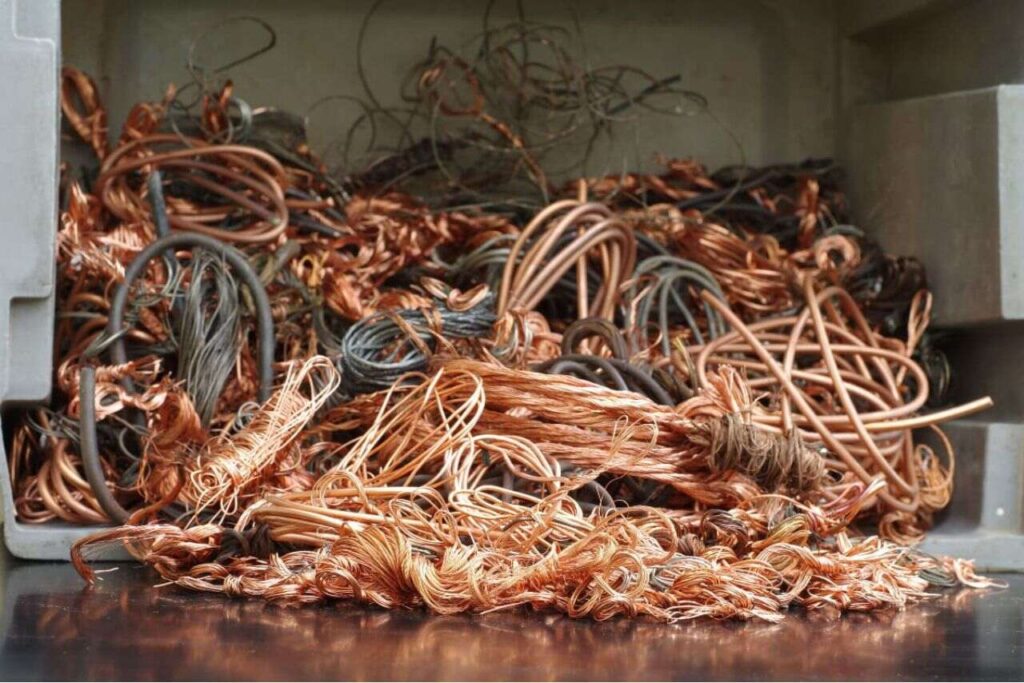
Synopsis: After delivering nearly 100% revenue growth and over 180% profit growth in FY26, Sunlite Recycling is focusing on higher-margin value-added products such as ATC wires and busbars. With capacity expansion, improving EBITDA per tonne, and plans for a copper anode plant, management is aiming to drive the next phase of profitable growth.
Sunlite Recycling Industries has emerged as a fast-growing player in India’s copper recycling industry, backed by strong operational execution and a growing focus on value-added products. FY26 was a transformational year, with revenue rising 98%, EBITDA growing 151%, and profit after tax increasing 181%.
Beyond scale, the company is now concentrating on improving profitability through products such as ATC wires and busbars, while undertaking capacity expansion and backward integration initiatives. These strategic moves could play a crucial role in shaping its future growth trajectory.
With a market cap of Rs 610 crore, the shares of Sunlite Recycling Industries Ltd are trading at Rs 444 and are trading at a PE of 15 compared to their industry’s PE of 16. The shares have given a return of about 400% since their low in April 2025.
FY26 Marks a Transformational Year
The FY26 turned out to be a milestone year for Sunlite Recycling Industries, as it witnessed one of the best years since its incorporation. Revenue increased to nearly double, reaching a total of Rs 2,765 crore and posting growth of 98% in comparison to last year. Even more impressive was the growth in profitability, as profits after taxes grew by more than 181%, to Rs 40.14 crore.
There was also robust growth in EBITDA, which increased by about 151%. According to management, this performance is on account of healthy demand for its products, rising efficiency and value addition to its products. While maintaining a strong presence in the copper recycling industry, it also managed to make a mark internationally.
What is noteworthy about FY26 is that the performance is not based on high copper prices and volume of trading. On the contrary, management emphasized on improvements in product mix and value addition as factors responsible for improving its earnings.
Why Margins Are Improving
One of the most interesting trends that were talked about on the conference call is the improvement in EBITDA per tonne. The management mentioned that EBITDA per tonne improved from around Rs 14,000 in previous periods to almost Rs 23,000. Improvement in this metric is very positive since copper recycling can be considered a bulk business, which operates under low margins.
Thus, the fact that EBITDA per tonne grew demonstrates the progress of the company along the value chain instead of being just a pure commodity processor. The management mentioned that the reason for the improvement in the margins was an improvement in the realization of value-added products such as ATC wires and busbars.
Since the difference between standard copper products is in additional processing, high customer specifications and low competition in this product line allow for achieving much higher margins. Thus, profitability growth outperformed revenue growth during the period. This aspect has become one of the most interesting points of the story since it means that the future earnings growth will not necessarily rely only on volumes.
The Shift Towards Value-Added Products
Another major theme during the conference call was the increased contribution of the value-added products by the management. In the past, the business of the company was primarily dependent on the recycling of copper and copper wire rods. Though the two segments still form an important part of the business portfolio of the company, the next growth phase for the firm lies in developing products that generate higher margins and foster better relations with customers.
The plan here involves increasing the proportion of products like ATC wires and bus bars among total revenues. Since these products involve additional processing, they help the company derive more value from every tonne of copper processed. As mentioned by management, value-added products have already started adding significantly to profitability and will keep doing so in the coming years.
The above plan becomes extremely relevant as it helps the company diversify away from the earnings that depend heavily on the price of commodities. In other words, rather than competing on the basis of copper prices, the company is working towards building avenues for enhancing profitability through specialised products.
ATC Wires Become an Important Growth Driver
Among the various value-added products offered by the company, ATC Wires turned out to be one of the most successful segments during FY26. The management observed good demand for the product category and emphasized its contribution to the bottom line. In order to take advantage of the opportunities, the company has already started its capacity enhancement efforts.
As compared to the current capacity of 800 tonnes per annum, the capacity of manufacture of ATC wires has already been enhanced up to 1,600 tonnes per annum. In doing so, the management has shown its faith in future demand and profits from the segment. As per the management of the company, ATC wires are more profitable than the conventional copper wires.
Thus, the capacity enhancement is a way to show the readiness of management to invest in areas which provide better return. With improvement in the utilisation, this will certainly contribute to the top line as well as the bottom line. The management has expressed optimism about good future demand for ATC wires.
Busbars Could Become the Next Margin Lever
Another category of products that receives a lot of focus is that of busbars. Busbars were mentioned by the management as a category of products that can be value-added, hence supporting the company’s journey towards margin improvement. Usage of busbars is expanding in various applications, including industry, electrical applications, renewable energy, and infrastructural applications.
According to the management, the realization is better for busbars than traditional copper products due to added processing and customisation. Therefore, the product category matches the vision of the company to improve its value addition. The company is, therefore, considering growth opportunities based on the rising demands.
The reason why busbars are so appealing to the company is their perfect match with the current copper ecosystem of the company. The raw materials, processing knowledge, and customer base already exist, enabling the company to enter the new category without any major changes to its business model.
Capacity Expansion Supports Future Growth
In order to support both volume and value addition, the company has also laid out an elaborate plan for capacity expansion. Management mentioned that about Rs 30-35 crore capital expenditure would be incurred on future growth projects. These investments are directed towards enhancing production capacity and enabling new product lines.
Expanding production capacity of copper rods is one of the major factors in the company’s capacity expansion plan. Management is of the view that there is a healthy demand for these products, and by expanding capacity the company can get a larger market share. Also, the expanded capacity would provide a base for scaling value-added products.
Capacity expansion is critical for the business since it not only facilitates growth but also profitability objectives at the same time. Higher capacity enables higher volumes, whereas specialisation in products improves margins. Management is optimistic that these measures would enhance the company’s competitive strength and facilitate growth going forward.
It should be noted that expanding capacity is in sync with management’s optimistic outlook on the copper industry itself. Drivers like electrification, infrastructure development, renewable energy, and industries are expected to drive future demand.
The Copper Anode Opportunity
One of the most intriguing topics addressed during the conference call was the company’s intention to enter into the production of copper anodes. This strategy is considered by management to be a key element of their vision which would allow them to integrate backward further in order to create value through the process of copper treatment.
Involvement in the production of the proposed copper anode plant will increase efficiency of operations and will give management more control over the process of raw materials processing. Through involvement in yet another process in the chain of value creation, the company might be able to make things more economically efficient and less dependent on external suppliers.
While the company continues to grow, management’s aspiration to develop the company in such a way to be able not only to recycle but also process the metal is quite clear from this strategic decision. The goal of creating additional value and increasing profitability is also evident from this initiative.
Typically investors seek companies capable of capturing a bigger share of the value chain, and this initiative seems to follow the trend. If implemented successfully, it would serve as one more factor in increasing margins.
Can Value-Added Products Drive the Next Growth Phase?
The pertinent question for the investors in relation to this would be whether margin expansion is sustainable based on value-added products in light of the impressive performance in FY26. From the management’s comments, it seems like the answer lies in the execution of the expansion strategy and higher contributions from such products as ATC wires and busbars.
There are some very encouraging signs seen in FY26. The revenue rose by 98%; the EBITDA saw a rise by 151%, while the PAT saw a rise exceeding 181%. What’s even more encouraging is the significant increase in EBITDA per tonne, which indicates that profitability improvement is outperforming volume increase. The management commented on the phenomenon multiple times, referring to the share of value-added products.
Some of the growth levers available to the company in the future could be capacity expansion, ATC wire growth, busbar, and copper anode production, as well as higher operational efficiencies.
For a stock that has already delivered extraordinary returns over the past year, sustaining investor interest will require continued improvement in profitability. Management’s emphasis on value addition suggests that margin expansion remains a central objective.
If the company successfully executes its plans and increases the contribution of higher-margin products, the next phase of growth may be driven as much by profitability gains as by revenue growth. In that scenario, value-added products could indeed become the key factor shaping the company’s future earnings trajectory.
Disclaimer: The views and investment tips expressed by investment experts/broking houses/rating agencies on tradebrains.in are their own, and not that of the website or its management. Investing in equities poses a risk of financial losses. Investors must therefore exercise due caution while investing or trading in stocks. Trade Brains Technologies Private Limited or the author are not liable for any losses caused as a result of the decision based on this article. Please consult your investment advisor before investing.
The post Copper Recycling Stock Up 400% Since April 2025: Can Value-Added Products Drive Margin Growth? appeared first on Trade Brains.
Related Articles

Data Centre Stock Hits 5% Upper Circuit After Receiving Approval to Raise Funds via QIP
Synopsis: Sterlite Technologies has initiated a fundraising exercise through ins...

Mayank Cattle Food Surges 4% as Trading Window Closes for Bonus Equity Review
Synopsis: Mayank Cattle Food Limited’s shares surged after announcing a board me...

SRF Shares: 5 Reasons Why Motilal Oswal Is Bullish on This Chemical Stock
Synopsis: SRF Limited is in focus after Motilal Oswal assigned a Buy rating wit...
5 Textile Stocks in Which Motilal Oswal Sees a Bullish Move With Up to 30% Upside
Synopsis: Motilal Oswal is bullish on five textile stocks, Gokaldas Exports, Ind...