Bitcoin Price Shakes Iran Fear as ETF Inflows Drive Short Squeeze Into The Vital $70K Level
Alex Smith
4 months ago
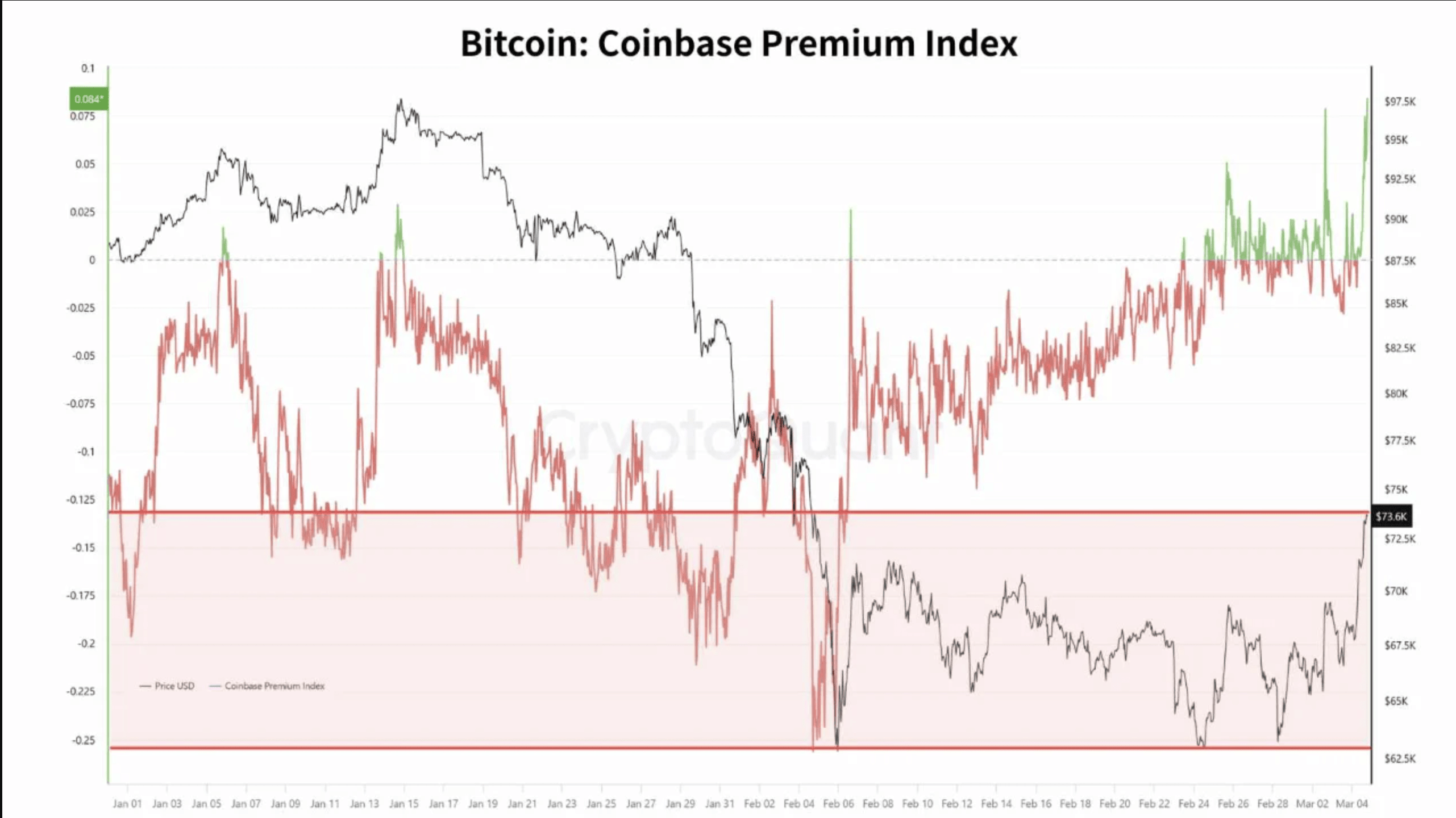
Bitcoin’s price recovered to around $73,000 in early March, after having fallen to the mid-$60,000 range from late January due to geopolitical unrest.
What The Data Says
Bitcoin’s price notable instability during the first trimester of the year seems to have a direct geopolitical correlation, CryptoQuant reports. Bitcoin dropped to around $63,000 on February 29, following the U.S.-Israel military strike on Iran on February 28 and the Iran heightened tensions in the Middle East. BTC had recovered near $70,000 by March 2, and by March 4 and 5 the price pushed to above $73,000 due to strong buying pressure.
Geopolitics In The Bitcoin PriceCryptoQuant highlights a classic short squeeze dynamic on the derivatives side. A short squeeze happens when when the price of an asset rises very suddenly and to the upside, which forces traders to buy back their shorts as price reverses. As the sellers get pushed out, the price rises even further due to liquidations.
Funding rates turned negative and futures open interest climbed during the dump, signaling that many traders were opening or adding short positions into the Iran headlines.
As the conflict failed to escalate further and ETF demand stayed positive, Bitcoin’s price pushed higher, triggering liquidations of late shorts and driving funding back toward neutral, rebounding toward the high‑$60K / $70K area. In CryptoQuant’s words, the episode looks like a temporary liquidity and positioning shock layered on top of the existing trend, not the start of a new war‑driven regime.
The Iran‑related sell‑off was primarily a flow‑event rather than a structural shift in holder behavior: it was less about investors “fleeing to safety” and more about how positioning and liquidity interacted around the shock.
A Broader Picture
This episode is not an outlier but part of a pattern in Bitcoin’s price on‑chain behavior across major conflicts. From Ukraine and Gaza to the recent crisis in Venezuela, they all display the same signature: a sharp, fear‑driven spike in coins moving onto exchanges around the event window, followed by a rapid normalization back to baseline as price re‑anchors to its prior trajectory. That was exactly what emerged during the Venezuela escalation, where military headlines amplified intraday volatility but failed to trigger a sustained distribution phase or a structural trend change.
Wars and geopolitical conflicts inject short‑term stress into flows, but once the initial panic fades, Bitcoin tends to revert to the macro trend that was already in place.
Cover image from ChatGPT, BTCUSD chart from Tradingview
Related Articles
Bitcoin Bears Eye Lower Levels As TradingView Analysts Flag Failed Recovery
TradingView analysts warn Bitcoin's rebound may still be a resistance retest as...

Bitcoin Reclaims $63,500 As Traders Watch For Squeeze Toward $67,000
Bitcoin bulls are watching the $63,500 support zone as traders map a potential s...

Bitcoin Analysts Split Between Buyer Demand And Resistance Ceiling Near $65,000
Bitcoin analysts are split as BTC shows buyer demand but still faces a resistanc...

Bitcoin Faces Key $64,100 Resistance As Analyst Watches Fib Reaction Zone
An X analyst says Bitcoin is approaching local H4 resistance near $64,100, a lev...