Battery Stocks to Watch as India’s New Recycling Rules Raise Industry Concerns
Alex Smith
2 hours ago
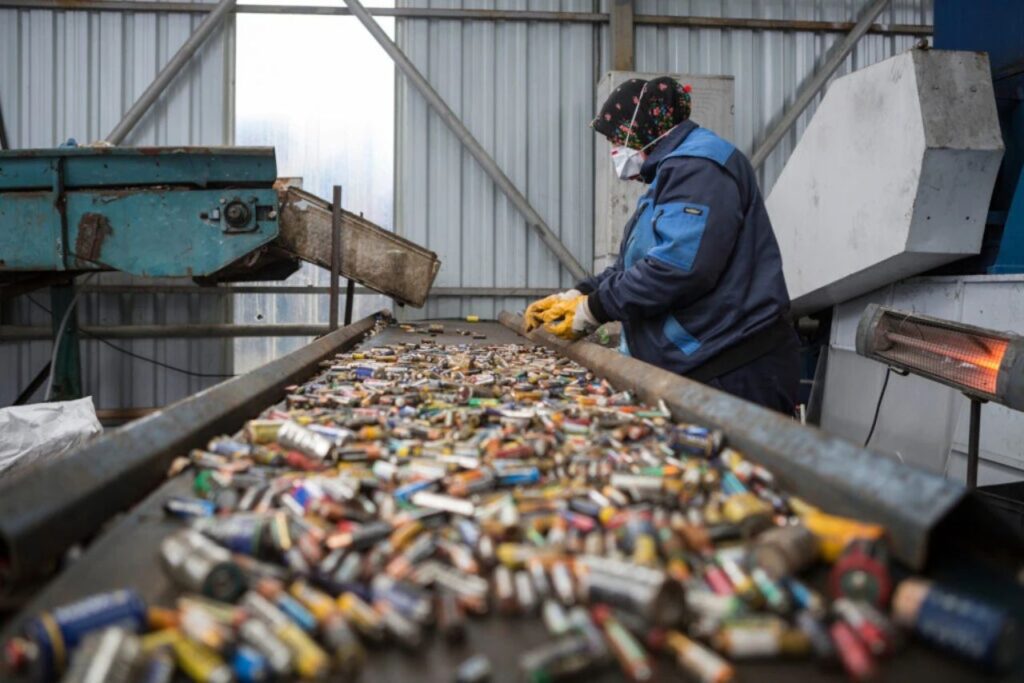
Synopsis: New battery recycling rules have sparked concerns among India’s dry-cell battery manufacturers, who say steep collection targets and compliance costs could hurt profitability and disrupt operations, bringing key sector stocks into the spotlight.
India’s dry-cell battery industry is facing growing uncertainty after manufacturers raised concerns over the implementation of the Battery Waste Management Rules, 2022. Industry players argue that the recycling targets and compliance requirements could significantly increase costs and disrupt long-established business models.
The sector, which sells more than 2 billion batteries annually and is dominated by zinc-carbon cells, says the current framework is better suited to lithium-ion batteries. With collection rates currently far below mandated levels and recycling technology still evolving, manufacturers warn that the new rules could put profitability and operations under pressure.
Crisis for Dry Cell Manufacturers
India’s traditional dry cell battery giants including household names like Eveready, Nippo, Panasonic, and Duracell are warning of potential factory shutdowns. The crisis stems from the government’s newly enforced recycling mandates under the Battery Waste Management Rules, 2022 (which took effect in 2025). Industry leaders argue that the strict compliance costs and aggressive collection targets have rendered their long-standing business models completely unviable, threatening a sector that sells over 2.2 billion units annually in India.
At the core of the industry’s grievance is that the current regulatory framework was largely designed around the economics and recycling capabilities of lithium-ion batteries. However, zinc-carbon dry cells make up 85% of India’s battery consumption.
Unlike lithium batteries, dry cells are small, hold very low residual material value, and are highly distributed frequently ending up mixed with general household waste. This makes them incredibly difficult to recover, with the industry currently only able to collect about 20% of volumes compared to the government’s steep 50% year-one target.
Devastating Compliance Costs
To enforce accountability, the rules mandate that manufacturers cannot recycle batteries themselves; instead, they must purchase digital Extended Producer Responsibility (EPR) certificates from authorised recyclers via a centralised portal. The pricing benchmarks for these credits are causing a massive financial bottleneck.
For instance, Panasonic Energy India noted that if forced to meet the 50% target, its EPR certificate costs would skyrocket to Rs. 50 crore—completely eclipsing its projected FY26 profit of just Rs. 6 crore. Across the board, industry estimates show that compliance penalties are roughly four times the wider dry cell sector’s entire profitability.
Technical Barriers to Recycling
Beyond the financial strain, manufacturers are facing severe technical roadblocks. Panasonic highlighted that current global and domestic recycling technologies for zinc-carbon batteries are still evolving.
The processes available do not yield a high enough metal purity to allow the recycled zinc to be safely reused in brand-new batteries. Because the regulation enforces strict reuse targets and pricing benchmarks without considering these technical limitations, manufacturers feel they are being penalised for a recycling ecosystem that does not yet exist.
Industry executives are urging the government to revise the current provisions to prevent widespread industry collapse. They point out that globally, waste and recycling policies of this scale are typically introduced gradually over a span of 6 to 7 years to allow a robust collection ecosystem to develop. In contrast, India’s immediate mandate of a 50% collection target from the very first year leaves manufacturers facing penalties ranging from Rs. 720 to Rs. 2,400 per kg, far exceeding the roughly Rs. 300 per kg cost of virgin zinc.
Stocks to watch
Eveready Industries India LtdEveready is one of India’s oldest and largest battery manufacturers, with a dominant presence in the dry-cell battery market through its widely recognised Eveready brand.
The company also operates in flashlights, lighting products, and small appliances. Given its significant exposure to zinc-carbon batteries, any sharp increase in recycling and compliance costs under the new Battery Waste Management Rules could have a meaningful impact on profitability and margins. With a market capitalisation of Rs. 2,691 cr, the shares of Eveready Industries India Ltd were trading at Rs. 369.85 per share, up from its previous close of Rs. 367.25 per share.
Indo National LtdIndo National is the maker of the popular Nippo battery brand and is a key player in India’s dry-cell battery segment. The company manufactures a range of batteries, flashlights, and electrical products, with a substantial portion of its business linked to zinc-carbon batteries. As the new recycling norms raise collection and compliance obligations, investors are watching the company closely for potential cost pressures and their impact on earnings. With a market capitalisation of Rs. 262 cr, the shares of Indo National Ltd were trading at Rs. 350 per share, down from its previous close of Rs. 352.65 per share.
Disclaimer: The views and investment tips expressed by investment experts/broking houses/rating agencies on tradebrains.in are their own, and not that of the website or its management. Investing in equities poses a risk of financial losses. Investors must therefore exercise due caution while investing or trading in stocks. Trade Brains Technologies Private Limited or the author are not liable for any losses caused as a result of the decision based on this article. Please consult your investment advisor before investing.
The post Battery Stocks to Watch as India’s New Recycling Rules Raise Industry Concerns appeared first on Trade Brains.
Related Articles
₹65,457 Cr Order Book: Stock Jumps 4% After Receiving ₹2,957 Cr Orders Across Multiple Businesses
Synopsis: Kalpataru Projects International has secured fresh infrastructure orde...

Realty Stock Jumps 8% After Signing ₹2,200 Cr Mumbai Redevelopment Agreement
Synopsis: Crest Ventures, through its subsidiary SHPL, has signed a redevelopmen...

6 Fundamentally Strong Stocks Trading Near Their 52-Week Lows to Add to Your Watchlist
Synopsis: Six sector heavyweights are trading near their 52-week lows. Despite r...

Astral Share: How Its Demerger Could Unlock Premium Valuations
Synopsis: Astral Ltd has attracted attention after Citi set a target price of ₹1...