Aave Crosses $1 Trillion In Loans — No Bank Required
Alex Smith
4 months ago

It started as an idea. Now it processes more lending volume than most people will ever see in a lifetime. Aave, the decentralized finance protocol that lets users borrow and deposit crypto without going through a traditional bank, has crossed $1 trillion in total cumulative lending — a milestone that has never been reached by any other protocol in the DeFi industry.
From A 2017 Startup To A Trillion-Dollar Lending Machine
Aave was not always called Aave. Its founder, Stani Kulechov, first launched the platform under the name ETHLend in November 2017 before rebranding it in September 2018.
What began as a small peer-to-peer lending experiment on the Ethereum blockchain has grown into the dominant force in decentralized lending, with over $27 billion in total user funds currently secured on the platform.
Aave crossed $1 trillion all-time loans.
A first in DeFi history. pic.twitter.com/9zMKhtGq6R
— Aave (@aave) February 25, 2026
Over the past 30 days alone, Aave generated more than $83 million in fees — nearly four times more than its nearest competitor, Morpho. Other well-known lending platforms including JustLend, SparkLend, Maple, and Compound Finance each hold over $1 billion in total value locked, but none come close to matching Aave’s scale.
“A decade ago, DeFi and Aave didn’t exist. They were just ideas. Today, Aave stands as the backbone of onchain lending, powering a new financial system that is open, global, and unstoppable,” Kulechov said in a post on X following the announcement.
His longer-term ambitions are even bigger. Kulechov has said he wants Aave to become the largest and most efficient liquidity network on the planet — one that banks, builders, and financial technology companies connect to by default.
Big Finance Names Are Already At The Table
Aave is no longer just for crypto enthusiasts. In August last year, Aave Labs launched a new product called Aave Horizon, a lending market built on Ethereum and designed specifically for traditional financial institutions.
The idea is to allow established finance firms to borrow stablecoins using real-world assets as collateral. According to reports, VanEck, WisdomTree, and Securitize were among the first major institutions to participate in the offering — a sign that the gap between conventional finance and decentralized protocols is narrowing.
Kulechov has also been vocal about what he sees as the next big opportunity for DeFi lending. Reports say he believes that tokenizing what he calls “abundance assets” — things like solar energy infrastructure, battery storage systems, and robotics used in labor — could open an entirely new category of collateral for decentralized lending. He expects those types of assets to be worth a combined $50 trillion by 2050.
Featured image from BTCCard, chart from TradingView
Related Articles
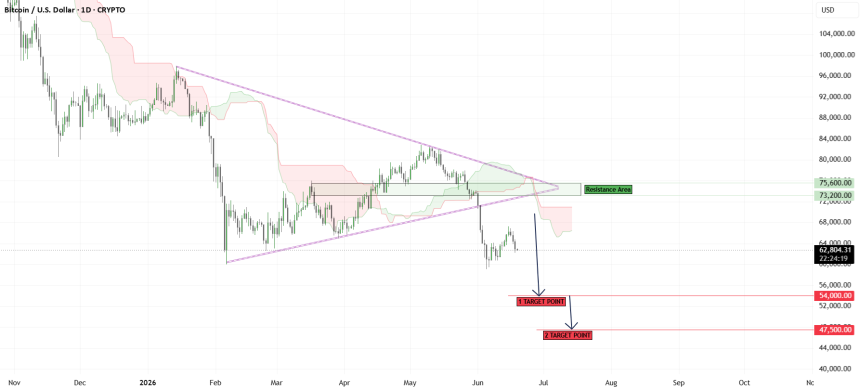
Bitcoin Bears Eye Lower Levels As TradingView Analysts Flag Failed Recovery
TradingView analysts warn Bitcoin's rebound may still be a resistance retest as...

Bitcoin Reclaims $63,500 As Traders Watch For Squeeze Toward $67,000
Bitcoin bulls are watching the $63,500 support zone as traders map a potential s...

Bitcoin Analysts Split Between Buyer Demand And Resistance Ceiling Near $65,000
Bitcoin analysts are split as BTC shows buyer demand but still faces a resistanc...

Bitcoin Faces Key $64,100 Resistance As Analyst Watches Fib Reaction Zone
An X analyst says Bitcoin is approaching local H4 resistance near $64,100, a lev...